
When customers ask us about upgrading their car speakers, one of the first questions we hear is whether they should choose component vs coaxial speakers. Coaxial speakers combine the woofer and tweeter in one unit, making them easier to install, while component speakers separate the drivers for better placement, tuning, and soundstage.
That difference is important because there is no single “best” speaker for every vehicle. After more than 20 years of helping drivers improve their car audio, we have learned that the right setup depends on your sound goals, factory system, installation needs, and plans for future upgrades.
For drivers in Norwalk and Oxnard, CA, understanding these differences is the first step toward choosing the right speaker system.
What Are the Main Types of Car Speakers?
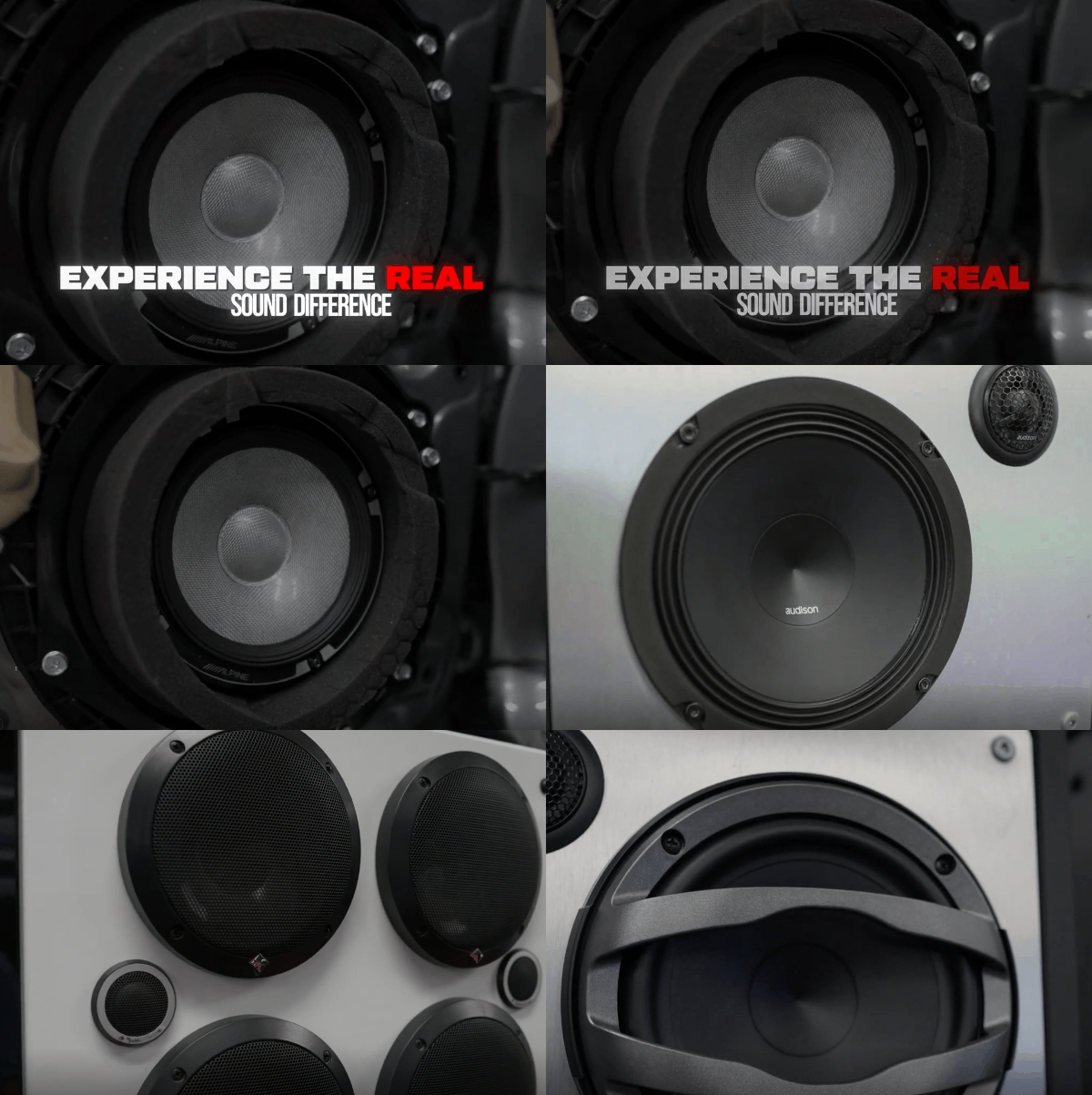
Most aftermarket car audio speakers fall into two broad categories: coaxial speakers and component speakers.
Although there are many different speaker sizes, configurations, and designs available, these two categories describe how the individual speaker drivers are arranged.
Coaxial or Full-Range Speakers
Coaxial speakers combine multiple drivers into one assembly.
A typical 2-way coaxial speaker contains a larger woofer and a smaller tweeter mounted together. The woofer handles much of the lower and midrange frequencies, while the tweeter reproduces the high frequencies.
Some coaxial designs add additional drivers and are marketed as 3-way or even 4-way speakers.
Because everything is built into one unit, coaxial speakers are often a convenient option for replacing factory speakers without making major changes to the vehicle.
Component Speaker Systems
Component speakers take a different approach.
Instead of combining the woofer and tweeter in one assembly, component systems separate them. A common component car speaker system includes a woofer or midbass driver, a dedicated tweeter, and some type of crossover or frequency-filtering system.
Separating those drivers gives us more flexibility when designing the system. We can place the tweeter in a location that helps improve the soundstage, while the woofer can remain in the factory door location.
This flexibility is one of the biggest differences when comparing component vs coaxial speakers.
What Are Coaxial Speakers and How Do They Work?
Coaxial speakers are designed to reproduce a wide range of frequencies from one compact location.
The woofer handles the lower and middle parts of the audio spectrum, while the tweeter reproduces higher frequencies such as vocals, cymbals, and fine musical details. Both drivers share the same general mounting point.
That compact layout is one reason coaxial speakers are so popular for factory speaker upgrades.
If the speaker size, mounting depth, wiring, and electrical requirements are compatible with the vehicle, coaxial speakers can often provide a straightforward way to improve clarity and overall sound without redesigning the entire car audio system.
However, we never recommend assuming that any aftermarket coaxial speaker will automatically fit perfectly into a factory location.
Speaker diameter is only one factor. We also look at:
- Mounting depth
- Factory brackets
- Window clearance
- Speaker impedance
- Factory amplifiers
- OEM processing
- Wiring configuration
A properly matched speaker will usually perform better than a speaker chosen simply because it has impressive specifications on the box.
What Are Component Speakers and How Do They Work?
When we build a system around component speakers, we have more control over where each driver is installed.
The woofer or midbass driver is commonly mounted in the door, while the tweeter can be installed higher in the cabin. Depending on the vehicle, that might be in a factory sail-panel location, the upper door, dashboard, or A-pillar.
Some vehicles already come with separate factory tweeters, which can make component speaker installation easier.
The biggest advantage is flexibility.
With component vs coaxial speakers, the component design gives us more freedom to control how the high frequencies reach the listener.
Why Do Component Speakers Use a Crossover?
Different speaker drivers are designed to handle different parts of the audio spectrum.
A tweeter is designed for high frequencies. A woofer or midbass driver handles lower frequencies and much of the midrange.
The speaker crossover helps divide the audio signal so each driver receives the frequencies it is intended to reproduce.
Many traditional component systems include an external passive crossover. Other systems may use inline filters, amplifier-based crossovers, or digital signal processing.
From our perspective, the important point is not whether there is a separate crossover box. What matters is that the frequencies are managed correctly so the drivers can work together smoothly.
Component vs Coaxial Speakers: What Is the Difference?
The main difference between component vs coaxial speakers comes down to driver placement, installation complexity, and overall system flexibility. While both can improve in-car sound, each design supports a different upgrade approach.
Simple and Space-Efficient
Coaxial speakers combine multiple drivers in one assembly, making them a practical option for factory speaker replacement and straightforward installation.
Flexible and Sound-Focused
Component systems separate the drivers, giving installers more control over tweeter placement, crossover setup, and overall sound performance.
| Factor | Coaxial Speakers | Component Speakers |
|---|---|---|
| Driver layout | Combined in one assembly | Drivers installed separately |
| Tweeter placement | Fixed | Flexible |
| Installation | Generally simpler | More involved |
| Space required | Less | More |
| Soundstage control | More limited | Greater potential |
| Tuning flexibility | Moderate | Higher |
| Common use | Factory speaker replacement | Sound-quality-focused upgrades |
Coaxial speakers are typically easier to install because the woofer and tweeter are already packaged together.
Component speakers require more planning because we need to decide where the tweeter will go, how the crossover will be handled, and how the drivers will integrate with the rest of the car audio system.
At the same time, we do not believe that every component speaker automatically sounds better than every coaxial speaker.
Speaker quality, amplifier power, installation, tuning , door acoustics, and vehicle design all influence the final result.
Why the Extra Effort Can Matter
A properly planned component system can provide a noticeable advantage for listeners who care about soundstage , stereo imaging , and fine musical detail.
That does not mean coaxial speakers are the wrong choice. It simply means that component systems offer more control when sound quality and tuning precision are a higher priority.
Why Do Component Speakers Often Provide Better Sound Quality?

When customers compare component vs coaxial speakers, component systems are often associated with higher sound-quality potential.
There are a few reasons for that.
Better Control Over Speaker Placement
When customers compare component vs coaxial speakers, component systems often offer greater sound-quality potential because they give us more control over driver placement.
Better Control Over Speaker Placement
Because high frequencies are more directional, tweeter placement matters. Separating the tweeter lets us position it where sound can reach the listener more clearly, improving detail and overall balance.
Better Soundstage and Stereo Imaging
A well-installed component system can also create a more natural front soundstage. Instead of music seeming to come from low in the doors, vocals and instruments can sound more centered, spacious, and accurately positioned.
Why Does Tweeter Placement Matter?
Tweeter placement can dramatically influence how a car audio system sounds.
This is another important factor in the component vs coaxial speakers decision.
Because high frequencies are directional, changing the tweeter position or angle can affect:
- Vocal placement
- Detail
- Soundstage height
- Stereo imaging
- Tonal balance
- Overall clarity
Common tweeter locations include the sail panel, upper door, dashboard, and A-pillar.
However, higher placement is not automatically better.
A tweeter that is poorly positioned or overly aggressive can make a system sound harsh or disconnected from the woofer. The best location depends on the vehicle, crossover settings, driver characteristics, listening position, and overall tuning.
That is why we look at the entire system rather than choosing a location based on appearance alone.
Why Are Coaxial Speakers Easier to Install?
Installation simplicity is one of the strongest advantages of coaxial speakers.
With component vs coaxial speakers, a coaxial system requires fewer separate mounting locations because the woofer and tweeter share one assembly.
When the speaker is compatible with the factory opening, installation can be relatively straightforward.
Component systems can involve additional steps such as:
- Mounting separate tweeters
- Running additional wiring
- Finding space for passive crossovers
- Modifying factory locations
- Adjusting crossover settings
- Tuning driver levels
That additional work is not necessarily a disadvantage. It simply means component systems are typically more involved.
For many drivers who want an uncomplicated factory speaker upgrade, coaxial speakers make a lot of sense.
What Else Affects How New Car Speakers Sound?
Even high-quality speakers depend on the rest of the car audio system. Whether you choose component vs coaxial speakers, factors like amplifier power, crossover settings, DSP tuning, speaker mounting, and cabin acoustics can all affect what you hear.
If the system sounds harsh, crackly, or distorted, the speaker may not be the only issue. Clipping, wiring problems, or improper tuning can cause similar symptoms, which we explain in our guide to the most common causes of car speaker distortion.
Door vibration can also reduce clarity and midbass performance. Our guide to car sound damping in Oxnard explains how proper treatment can help create a more stable environment for your speakers.
Don't Choose Car Speakers by Type Alone
Choosing component vs coaxial speakers is only part of the process. The speakers also need to match your vehicle, factory system, and available power.
Speaker Sensitivity
Sensitivity shows how efficiently a speaker uses power. Higher sensitivity can be helpful when running speakers from a factory radio or another lower-powered source.
RMS Power Handling
RMS power handling indicates how much continuous power a speaker can safely manage. We focus on realistic RMS ratings rather than inflated peak-power numbers.
Speaker Impedance
Impedance affects how speakers work with the factory system or amplifier. Since some vehicles use specific impedance requirements, proper matching is important for reliable performance.
If your current speakers sound weak or damaged, check the signs your car speakers may be wearing out before choosing a replacement.
Choosing a Car Speaker System in Norwalk or Oxnard, CA
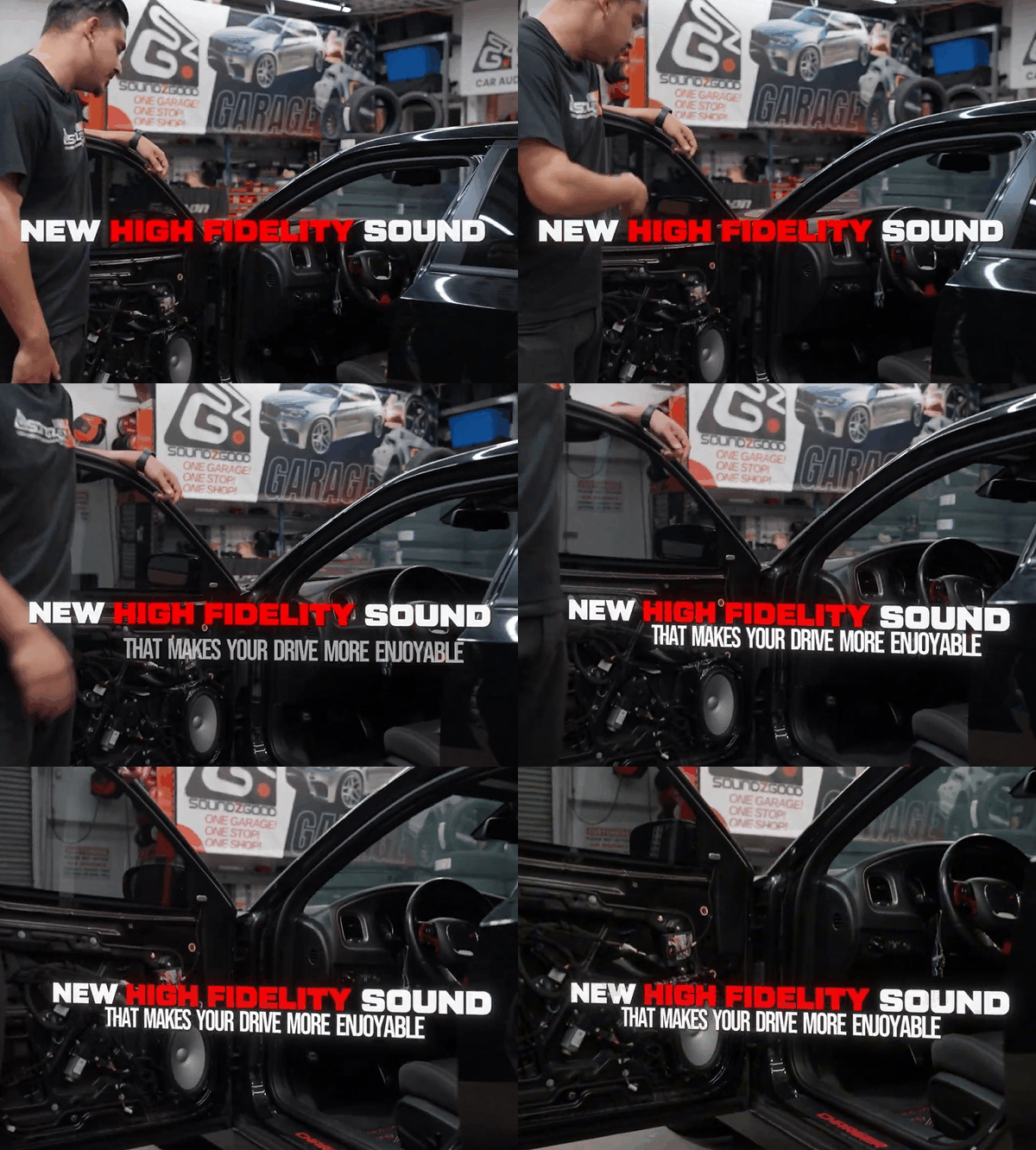
When customers compare component vs coaxial speakers, we start with the vehicle—not the price tag. We look at the factory audio system, speaker locations, available power, listening preferences, and future upgrade goals.
Our professional car audio solutions can include speaker upgrades, amplifiers, DSP tuning, OEM integration, sound damping, and complete system setup.
Because every vehicle sounds different, the same speakers can perform differently from one car to another. That is why we focus on proper matching, installation, and tuning to get the best possible result from your system.
Ready to Make Your Car Sound Better?
Choosing between component vs coaxial speakers comes down to how you want your system to sound, feel, and grow over time.
Coaxial speakers are a smart choice for a simple, practical upgrade, while component speakers give you more control over soundstage, tweeter placement, and tuning.
At Soundz Good Garage , we help drivers in Norwalk and Oxnard build car audio systems that match their vehicle, listening style, and upgrade goals.
Ready to Hear the Difference?
Tell us about your vehicle and what you want from your sound system. Our team can help you choose the right speaker setup for your goals.
Frequently Asked Questions
Are Component Speakers Always Better Than Coaxial Speakers?
No.
Component speakers usually provide more installation and tuning flexibility, but that does not guarantee better sound.
A high-quality coaxial speaker that is properly installed, powered, and tuned can sound better than a poorly installed component system.
Do Component Speakers Need an Amplifier?
Not always.
Some component speakers can operate from a compatible factory or aftermarket head unit.
However, many higher-performance component sets benefit from a properly matched external amplifier because it provides more clean power and greater headroom.
Can Coaxial Speakers Replace Factory Speakers?
Often, yes.
Coaxial speakers are commonly used as factory replacement speakers because their compact design can fit existing locations.
However, compatibility still depends on mounting depth, speaker size, brackets, impedance, wiring, and the factory audio system.