
Crackling, buzzing, rattling, weak bass, muffled vocals, and distortion at moderate volume are the clearest signs that you may need a car speaker upgrade in Oxnard, CA. Before replacing anything, we recommend checking each speaker and ruling out loose trim, wiring faults, stereo settings, and amplifier issues that can create similar symptoms.
That distinction matters because the noise you hear does not always reveal which component has failed. At Soundz Good Garage, we have spent more than 20 years improving in-car sound, and our experience has shown us that a damaged speaker, loose panel, poor connection, or overdriven radio can produce surprisingly similar problems.
For that reason, we begin with a careful diagnosis instead of recommending parts based on guesswork. Once we identify the source of the issue, we can suggest a practical upgrade that suits your vehicle, listening preferences, and long-term audio goals.
How Can You Tell If Your Car Speakers Are Wearing Out?
Common warning signs include distortion, crackling, buzzing, rattling, muffled sound, weak bass, missing high frequencies, and one speaker sounding different from the others.
1. Why Does the Sound Become Distorted at Moderate Volume?
Distortion at maximum volume can happen when a radio or amplifier reaches its clean output limit. Distorted car speaker sound at a normal listening level is more concerning.
You may hear fuzzy vocals, harsh instruments, or notes that seem to break apart. Spoken audio and familiar vocal tracks are useful for comparison because reduced sound clarity is easier to notice.
If one channel sounds rough while the others remain clean, the speaker, connection, or amplifier channel may need attention. A car speaker upgrade in Oxnard, CA should correct the cause rather than simply make the system louder.
2. Why Are My Car Speakers Crackling or Buzzing?
Crackling car speakers can point to a damaged cone, worn speaker surround, poor terminal connection, loose wiring, or voice coil failure.
Notice when the noise occurs. Crackling over bumps may suggest an intermittent connection. Buzzing that follows the music may be linked to speaker movement. A constant hum without music may come from another part of the system.
Do not repeatedly turn up the volume to test the noise. If it becomes harsher, lower the volume and arrange an inspection.
3. Why Does a Speaker Rattle During Bass Notes?
A rattling speaker sound may come from a damaged cone, loose mounting hardware, door trim, a grille, or an item stored in the door pocket.
Remove loose objects first. If gentle pressure on the door panel changes the noise, the trim or mount may be involved. If the rattle remains when the panel is secure, the speaker may be worn.
Our car audio solutions can include speakers, amplifiers, subwoofers, digital processing, OEM integration, and sound damping. We inspect the system because damping can reduce panel vibration, but it cannot repair a torn cone.
4. Why Has the Bass Become Weak or Muddy?
A worn speaker can still make sound while losing control of lower frequencies. Kick drums may feel soft, bass guitar may lose definition, and music may sound thin.
Weak bass response may come from a damaged woofer, deteriorated surround, incorrect polarity, crossover settings, or factory-system limitations. This is why factory speaker replacement in Oxnard should begin with testing.
A speaker replacement may improve midbass. Drivers who want deeper bass may also need a properly matched subwoofer rather than asking door speakers to handle frequencies they were not designed to reproduce.
5. Why Does My Car Audio Sound Muffled?
Muffled car audio can make voices seem distant and high frequencies disappear. The problem may involve a failed tweeter, damaged full-range speaker, blocked grille, extreme tone settings, or poor source audio.
Reset the sound controls, then compare radio, Bluetooth, and a wired or USB source. If one area still lacks detail, a car stereo speaker upgrade may restore balanced frequency response.
6. Why Does One Speaker Sound Quieter?
Unbalanced car audio may pull vocals towards one door or leave one side with less bass. Centre the balance and fade controls, then isolate each corner.
One failed speaker does not always mean the entire set needs replacing. When an exact match is available and the others are healthy, a single replacement may be reasonable. When a pair is the same age, replacing both often gives more consistent tone and volume.
7. Why Does Distortion Get Worse at Higher Volume?
Higher volume requires greater cone movement and more amplifier output. Existing mechanical damage becomes easier to hear as the speaker works harder.
The radio or amplifier may also produce a clipped signal when pushed beyond its clean range. That harsh signal can sound like a blown car speaker and place additional stress on the system.
During a car speaker upgrade in Oxnard, CA, we consider amplifier power, gain settings, crossovers, speaker impedance, and speaker power handling. Matching and tuning matter as much as the speaker model.
What Causes Car Speakers to Wear Out?
Car speakers operate in a demanding environment. They experience heat, vibration, dust, repeated door movement, and moisture.
Common causes include a cracked cone, worn surround, overheated voice coil, loose hardware, damaged wiring, excessive power, a distorted signal, or moisture entering a speaker location.
Not every factory speaker wears out quickly, and not every aftermarket speaker lasts longer. Durability depends on materials, installation quality, power matching, environmental exposure, and listening habits.
When Is a Car Speaker Upgrade the Right Move?
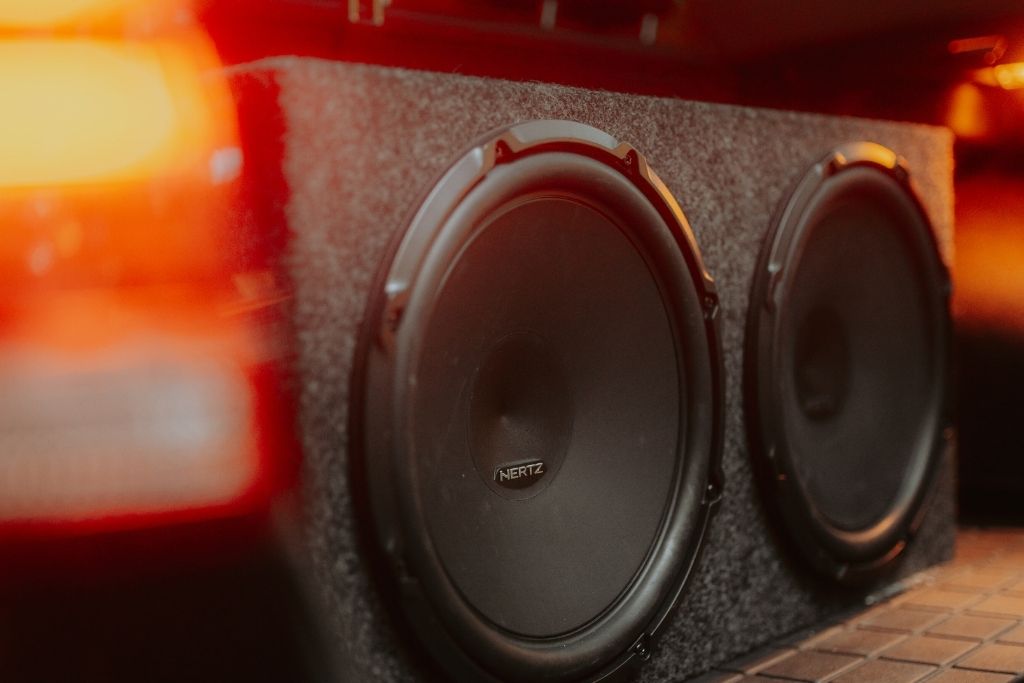
An upgrade makes sense when testing confirms speaker damage, several factory speakers have lost clarity, or the current system no longer meets your needs.
It can also be worthwhile when you are planning a larger car audio upgrade in Oxnard, CA. New speakers can then be selected to work with a future amplifier, processor, or subwoofer.
Our guide to upgrading a factory car stereo in Oxnard explains how speakers, radios, amplifiers, subwoofers, and factory integration can fit into a broader plan.
We are also honest when replacement is not the first step. If the problem is loose trim, an incorrect setting, or a wiring fault, repairing that issue may be the more sensible recommendation.
Should You Replace One Speaker, a Pair, or the Full Set?
Replace One Speaker When the Failure Is Isolated
A single replacement can work when the failed unit has a compatible match and the other speakers perform well.
The new speaker must fit physically and match the system’s electrical requirements. Choosing one only because it has the same diameter can lead to uneven tone, volume, or power handling.
Replace a Pair for Better Consistency
A matched pair often makes sense when both speakers are the same age or an exact factory replacement is unavailable. Matching the left and right channels helps maintain a balanced soundstage.
For many car speaker replacement Oxnard CA projects, the front pair deserves priority because it has the greatest effect on vocals and the driver’s listening position.
Replace the Full Set When Wear Is Widespread
A complete upgrade may be appropriate when several speakers are distorted or future amplification is planned. More equipment is not automatically better, so we consider condition, layout, budget, and future goals first.
How Do We Choose the Right Replacement Speakers?
The best car speakers in Oxnard are not one universal model. We consider fitment, impedance, sensitivity, power handling, sound preferences, and existing electronics.
Vehicle Fitment Comes First
Diameter is only one measurement. Mounting depth, window clearance, brackets, connectors, grilles, airbags, and door-panel design can all affect car speaker installation in Oxnard.
We use suitable adapters and secure mounting methods rather than forcing a speaker into a location that does not support it.
Power and Impedance Must Match
Speaker impedance must be compatible with the amplifier; it is not a quality rating. We also compare continuous power handling with the amplifier’s usable output instead of relying on peak-power figures alone.
Your Listening Preferences Matter
Some customers want clearer podcasts and calls. Others want stronger midbass, smoother vocals, or more detail at lower volume.
We ask how you use the vehicle, what you listen to, and whether more upgrades are planned. Those answers are more useful than choosing aftermarket car speakers in Oxnard by brand name alone.
What Happens During Professional Car Speaker Installation?
Professional car speaker installation involves more than swapping parts. Our process may include inspecting the current system, confirming fitment, protecting the interior, using suitable adapters, checking polarity, securing wiring, reinstalling panels, and testing every channel.
When amplification or processing is involved, we may also adjust gains, crossovers, equalisation, and timing. Our related guide explains what to expect from professional car audio installation in Oxnard.
Careful installation helps reduce rattles, protect wiring, and give the speakers a stable mounting surface.
Why Do Oxnard Drivers Choose Soundz Good Garage?
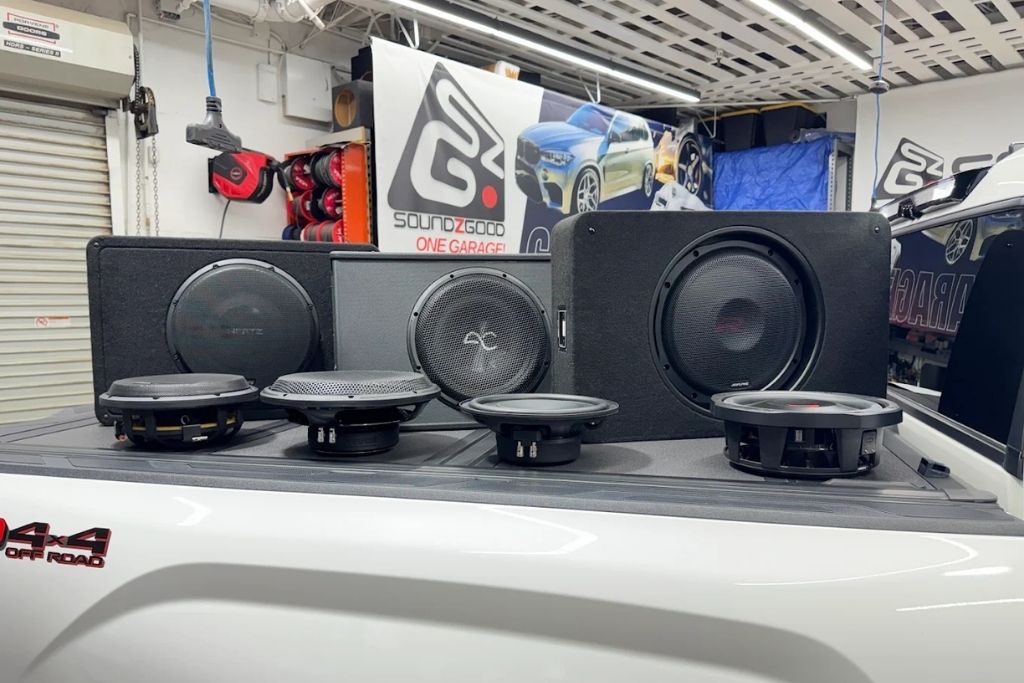
We are a family-owned Southern California vehicle-upgrade shop with more than 20 years of experience. At our Oxnard location, we work with daily drivers, family vehicles, work trucks, weekend cars, and custom builds from Ventura County and nearby communities.
We explain the trade-offs, set realistic expectations, and do not treat every sound complaint as a reason to sell a complete system.
You can view our Oxnard vehicle-upgrade portfolio to see examples of our work. For fitment questions, sound goals, or an existing problem, contact our Oxnard team.
Plan Your Car Speaker Upgrade in Oxnard, CA
Crackling, rattling, weak bass, muffled vocals, and distortion are good reasons to have your audio system checked. They do not always mean every speaker needs replacing.
At Soundz Good Garage, we approach each car speaker upgrade in Oxnard, CA with diagnosis first. We inspect the system, explain what we find, and recommend a practical solution based on your vehicle, budget, and listening priorities.
Visit our Oxnard car-audio team, send us your service questions, or request a personalised car audio quote to plan your upgrade.
FAQ
What Are the Most Common Signs of Blown Car Speakers?
Common signs include distortion at moderate volume, crackling, buzzing, rattling, weak bass, muffled sound, reduced output, missing frequencies, or silence from one speaker.
Can I Replace Factory Speakers Without Replacing the Radio?
Often, yes. The replacement speakers must be compatible with the factory system’s impedance, power, mounting depth, and signal. Some premium systems require additional integration.
Is Professional Car Speaker Installation Worth It?
Professional installation can help prevent fitment problems, wiring faults, rattles, incorrect polarity, and poor power matching. It also allows the complete system to be tested before and after the work.