
California Window Tint Laws require Oxnard drivers to follow different rules for each window. Front side windows must meet strict light-transmission standards, while rear side and rear windows can generally be darker. Windshield tint is limited to a specific upper area, and certain medical exemptions and certification requirements may also apply.
At Soundz Good Garage, we have helped Southern California drivers with window tint for more than 20 years. One of the most common questions we hear is, “How dark can I legally tint my windows?” The answer depends on the window, the film, and the factory glass.
For drivers considering car window tint in Oxnard, CA, this guide explains the California Window Tint Laws that matter in 2026, including VLT, windshield rules, rear-window requirements, medical exemptions, and tint compliance.
This guide is for general information and is not legal advice.
California Window Tint Laws at a Glance
Before getting into the details, here is a quick overview of the main California legal window tint requirements.
WINDOW | GENERAL CALIFORNIA RULE | IMPORTANT DETAIL |
Windshield | Transparent material is permitted only on the uppermost portion | Placement must meet California’s statutory measurement requirements |
Front side windows | Qualifying clear material is allowed under specific conditions | Film must provide at least 88% VLT, while the completed glazing must meet the applicable 70% minimum |
Rear side windows | Much darker tint may be used | Windows behind the driver have fewer tint-darkness restrictions |
Rear window | Dark tint is generally permitted | The vehicle must have compliant outside mirrors on both sides |
The important thing to remember is that California Window Tint Laws apply statewide. The same basic state requirements apply whether you drive in Oxnard, Norwalk, Los Angeles, or elsewhere in California.
What Does VLT Mean for California Window Tint?
One term you will hear often when researching automotive window film is visible light transmission, or VLT.
VLT measures the percentage of visible light that passes through a window.
A higher VLT percentage means more light passes through the glass, making the window appear lighter. A lower VLT percentage means less light passes through, creating a darker appearance.
For example:
- 88% VLT allows most visible light through.
- 70% VLT is still relatively light.
- 35% VLT has a noticeably darker appearance.
- 20% VLT provides significantly more privacy.
- 5% VLT is extremely dark.
One misconception we often encounter is that tint darkness automatically determines heat or UV protection. It does not.
Visible light transmission measures visible light. UV protection, heat rejection, infrared rejection, and glare reduction are separate performance characteristics.
That means a lighter ceramic window tint can sometimes provide excellent heat and UV performance without looking excessively dark.
Why Do California Tint Rules Mention Both 88% and 70% VLT?
This is one of the most misunderstood parts of California Window Tint Laws.
For qualifying material applied to front side windows, California law requires the material itself to have at least 88% visible light transmission.
At the same time, the completed window, meaning the factory automotive glass plus the applied film, must meet the applicable 70% light-transmittance requirement.
That distinction matters.
A common mistake is assuming that installing a film labeled “70%” automatically makes a front window legal. The final result depends on both the film and the original glass.
When drivers ask us about the California legal tint percentage, we always recommend looking beyond the film label and considering the completed window.
California Legal Window Tint Rules by Window
The easiest way to understand California tint regulations is to look at each window separately.
California Front Window Tint Law
The front side windows are among the most heavily regulated areas of the vehicle.
Under the applicable California rules, qualifying aftermarket window tint on the front side windows must be clear, colorless, and transparent. The material must provide at least 88% VLT, and the finished glass-and-film combination must continue to meet the applicable 70% light-transmittance requirement.
Qualifying material must also be designed to enhance UVA protection.
There is another detail drivers sometimes overlook: proper window tint certification.
For qualifying front-window installations, documentation identifying the installer and material manufacturer should be kept in the vehicle as required.
The condition of the tint matters as well. Film that bubbles, tears, deteriorates, or interferes with clear driver visibility may create a compliance problem even if it originally met the necessary specifications.
This is one reason we encourage drivers to choose professional window tint installation instead of selecting film based only on shade.
California Windshield Tint Law
The California windshield tint law is another area where online information can be oversimplified.
You may have seen websites describe California’s rule as allowing a universal “4-inch windshield tint strip.” That shorthand does not tell the whole story.
California law permits qualifying transparent material on the topmost portion of the windshield, but the actual rule uses a specific placement measurement rather than simply stating that every vehicle may have the same four-inch strip.
The lower edge of the permitted material must meet the statutory height requirement measured in relation to the driver’s seat.
The windshield material also cannot be red or amber, contain prohibited opaque lettering, or create excessive reflected glare.
For Oxnard drivers, the practical takeaway is simple: do not assume that a windshield tint strip is legal just because it looks similar to one installed on another vehicle.
Different vehicles have different windshield dimensions, seating positions, and glass configurations.
California Rear Side Window Tint Law
California gives drivers much more flexibility with the windows behind the driver.
Rear side windows can generally use significantly darker automotive window film than front side windows.
This is why SUVs, crossovers, trucks, and other vehicles often come from the factory with dark factory privacy glass behind the front seats.
If your goal is greater passenger privacy or a darker appearance, the rear side windows usually provide more flexibility under California Window Tint Laws than the front portion of the vehicle.
California Rear Window Tint Law
The rear window can also generally be tinted much darker, but there is an important requirement involving your mirrors.
When rear visibility through the glass is restricted, the vehicle must have compliant outside mirrors on both sides that provide the required rearward view.
In practical terms, drivers asking about the darkest legal tint in California need to understand that there is no single answer for the whole vehicle.
What may be permissible on rear side windows or the rear windshield may not be legal on the front side windows.
Why Are California's Front Window Tint Rules Stricter?
California’s stricter treatment of front glass is largely about driver visibility.
Drivers depend on the windshield and front side windows to see pedestrians, cyclists, other vehicles, road hazards, mirrors, and cross traffic.
A tint that feels comfortable on a bright Southern California afternoon can become much harder to see through at night or during poor weather.
This helps explain why California Window Tint Laws allow more flexibility behind the driver while maintaining tighter restrictions on the windshield and front side windows.
For drivers who want privacy and heat reduction without compromising visibility, the better solution is often choosing higher-performing film rather than automatically choosing the darkest available option.
Why Factory Glass Changes the Final VLT
One of the most important things to understand about California Window Tint Laws is that tint film does not exist independently from the glass underneath it.
Factory automotive glass already has its own light-transmission level.
Once aftermarket window tint is added, the two work together to determine the final VLT.
Imagine, for example, that a piece of factory glass transmits 80% of visible light. If an 88% VLT film were installed over it, the theoretical combined transmission would be approximately:
80% × 88% = 70.4%
That example is only meant to illustrate how combined VLT works. Actual automotive glass varies from vehicle to vehicle.
This is why we do not recommend choosing tint based exclusively on the number printed on the film specification.
Factory tinted glass, factory privacy glass, and aftermarket film all influence the completed window.
For anyone comparing film options, our guide to UV protection window tint for Oxnard vehicles explains why film performance involves much more than tint darkness.
California Window Tint Medical Exemption
A California does provide certain accommodations for drivers and passengers with qualifying medical conditions, but the rules are more specific than many people realize.
A California window tint medical exemption does not necessarily mean someone can permanently install any darkness of tint on the front windows.
Certain qualifying individuals may use approved sun-screening devices on front-seat side windows when they have appropriate medical documentation.
These devices must satisfy specific requirements, including rules concerning removability, visible light transmission, reflectivity, and use during darkness.
California also includes provisions for qualifying clear, colorless, transparent UV-blocking window film when a medical condition requires additional UVA protection and the proper medical certification is provided.
The important distinction is that a medical need does not automatically override every part of the California front window tint law.
If medical UV protection is important to you, we recommend confirming the current requirements before selecting a product or beginning installation.
What Happens If Your Tint Does Not Comply?
California window tint ticket may sometimes be issued as a correctable violation, often called a fix-it ticket.
Depending on the citation, a driver may need to correct the tint, obtain proof that the violation has been corrected, and submit that proof according to the court’s instructions.
The exact process and costs can depend on how the violation was cited and which court is handling it.
That is why we believe the best approach is to think about window tint compliance before installation, not after receiving a citation.
Choosing automotive window film based only on appearance can become expensive if the material later needs to be removed and replaced.
You Do Not Need Extremely Dark Tint for Heat and UV Protection
This is one of the most important points we explain to customers.
Darker tint does not automatically mean better heat rejection.
Tint darkness, UV rejection, infrared rejection, and total solar energy performance measure different things.
Modern ceramic window tint can provide strong heat rejection and UVA protection while maintaining better optical clarity and allowing more visible light through the glass.
That can be especially valuable for Southern California drivers who want a cooler, more comfortable interior while staying mindful of California Window Tint Laws.
At Soundz Good Garage, we offer several window film options designed around different priorities, from appearance and privacy to heat rejection and UV-blocking performance.
If comfort and sun protection are your main priorities, our detailed guide to choosing UV protection window tint in Oxnard explains what to compare beyond VLT alone.
You can also explore our car window tint options for Oxnard and Norwalk to see the types of film and installation services we provide.
Why Professional Window Tint Installation Matters
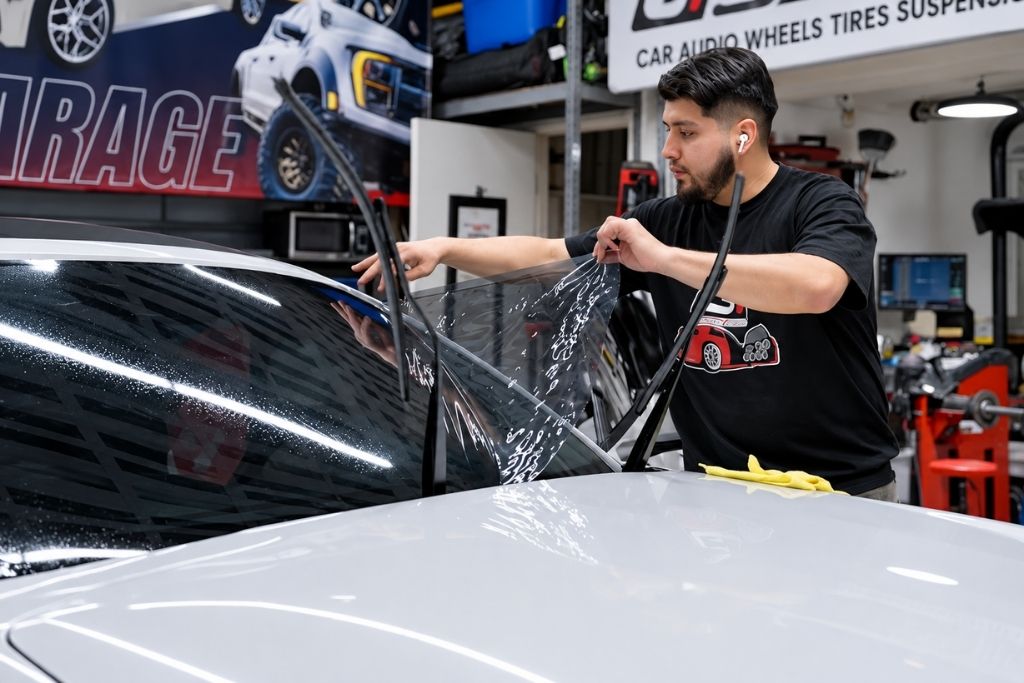
Window tint installation is not simply a matter of choosing a percentage and applying film.
A knowledgeable installer should consider the type of automotive glass, existing factory tint, the position of each window, the film specifications, and how those factors affect the finished installation.
Professional installation also matters for long-term visibility and appearance.
Poorly installed tint can develop:
- Bubbles
- Peeling edges
- Creases
- Contamination beneath the film
- Optical distortion
- Uneven cuts
Any of these issues can affect appearance, visibility, and overall driving experience.
At Soundz Good Garage, we have spent more than two decades helping Southern California drivers customize and upgrade their vehicles. We take a detail-focused approach because tint should look clean, perform well, and fit the driver’s needs.
For a closer look at workmanship and installation quality, read our guide explaining why an experienced car window tint installer matters.
And if you are still planning your budget, our breakdown of what affects car window tint cost explains how film type, vehicle size, glass complexity, and removal of existing tint can affect pricing.
Quick California Window Tint Compliance Checklist
Before tinting your vehicle in Oxnard, we recommend reviewing these points:
- Identify exactly which windows you want tinted.
- Check whether your vehicle already has factory tinted glass or privacy glass.
- Do not assume a film marked “70%” automatically satisfies California front-window requirements.
- Consider both the film VLT and the final glass-and-film light transmission.
- Follow the actual windshield tint placement requirements rather than relying on a universal strip measurement.
- Confirm mirror requirements if you plan to darken the rear window.
- Keep required tint documentation or certification in the vehicle.
- Compare tint darkness separately from UV protection and heat rejection.
- Prioritize clear driver visibility, especially at night.
- Verify current California Window Tint Laws before installation.
If you are unsure which film makes sense for your vehicle, start by reviewing our professional window tint services.
Choose Window Tint With Performance and Compliance in Mind
At Soundz Good Garage, we believe a good window tint should do more than make a vehicle look better.
It should complement the car, improve comfort, provide the performance you want, maintain clear visibility, and be selected with California Window Tint Laws in mind.
That is especially important because tint darkness alone does not tell you how well a film will reject heat or block UV exposure.
With more than 20 years of experience serving Southern California drivers, we understand that every vehicle and every customer has different priorities. Some drivers want additional privacy. Others care most about heat rejection, UV protection, glare reduction, or a cleaner appearance.
Our job is to help you understand the available options so you can make an informed choice.
Explore our window tint services in Oxnard and Norwalk, learn more about Soundz Good Garage, or contact our team to discuss the right window film for your vehicle.
Frequently Asked Questions
How Dark Can Window Tint Legally Be in California?
There is no single California legal tint percentage for the whole vehicle.
Rear side windows can generally be much darker than front side windows. Front side windows are subject to the requirements involving qualifying 88% VLT material and the applicable 70% completed-glazing minimum.
Why Does Factory Glass Affect Window Tint Percentage?
Factory automotive glass already reduces some amount of visible light.
When aftermarket window tint is applied, light must pass through both layers. As a result, the finished VLT can be lower than the percentage shown on the film itself.
Do Oxnard and Norwalk Have Different Window Tint Laws?
The primary rules discussed here come from California state law, so California Window Tint Laws apply in both Oxnard and Norwalk.
Local enforcement experiences may differ, but moving from one California city to another does not create a different statewide VLT standard.