
For most Norwalk drivers comparing all-terrain vs street tires, street or highway-focused tires are usually the better choice for everyday driving on paved roads and freeways. All-terrain tires are better suited for trucks and SUVs that regularly travel on dirt, gravel, job sites, or trails. The best option depends on how and where you drive most often.
At Soundz Good Garage, that is exactly where we start when helping customers choose the right tires. Instead of focusing only on appearance, we look at how the vehicle is actually used from day to day.
That means considering the vehicle itself, the owner’s driving habits, wheel size, suspension setup, comfort preferences, and the types of roads the tires will regularly encounter. These details help us narrow down whether a street-focused tire or an all-terrain option will provide the better overall experience.
With that in mind, comparing all-terrain vs street tires becomes less about choosing the more aggressive-looking option and more about finding the tire that best fits your real driving needs.
What Is the Difference Between All-Terrain vs Street Tires?
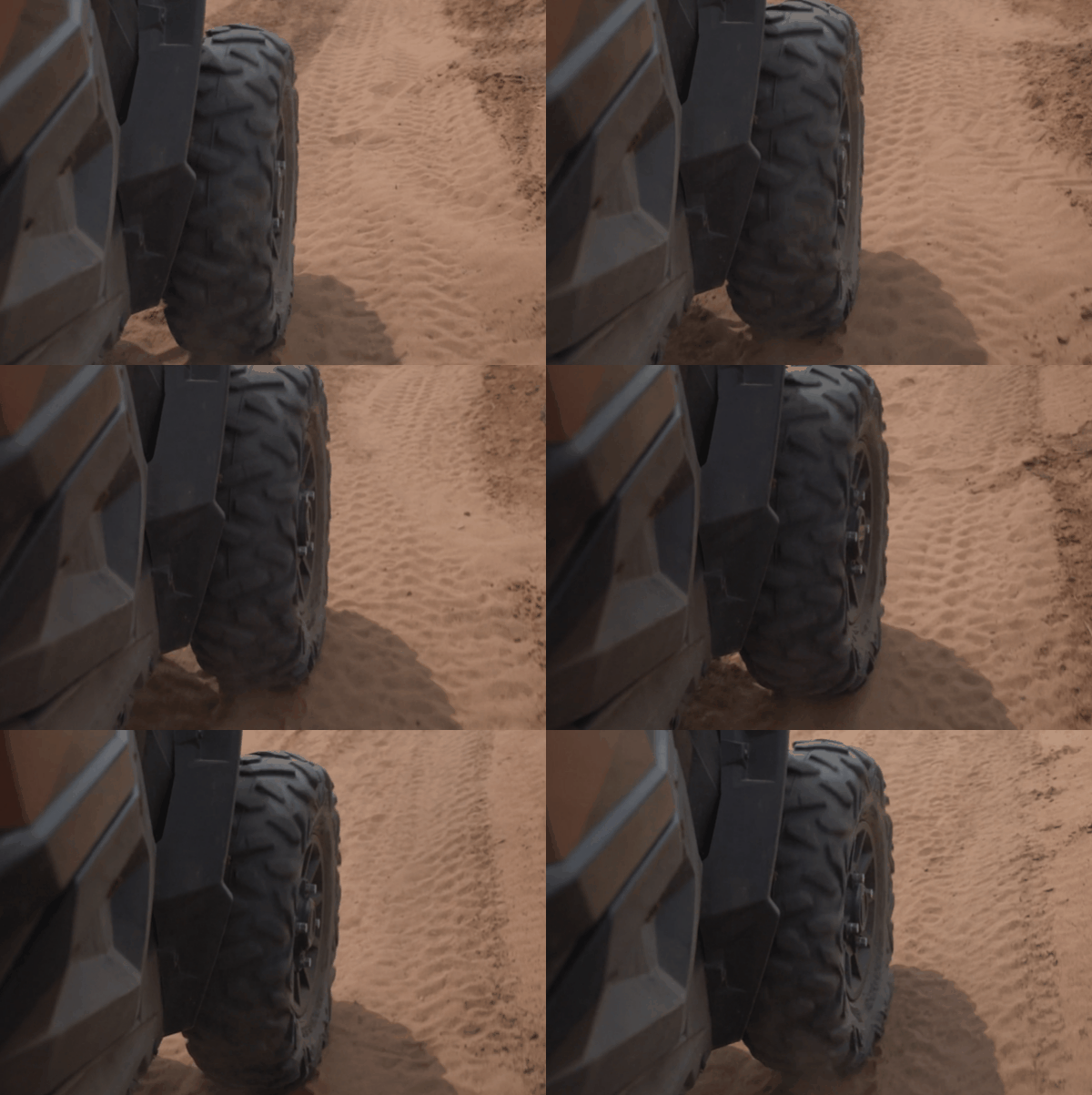
The main difference between all-terrain vs street tires is what each type is designed to prioritize.
Street tires are primarily engineered for pavement. Depending on the model, they tend to emphasize smooth highway performance, quieter operation, predictable steering, ride comfort, and efficient everyday driving.
All-terrain tires are built to handle a wider mix of surfaces. They still need to perform on pavement, but their tread patterns and construction are designed to provide additional traction when the road turns to dirt, gravel, or uneven terrain.
Neither option is automatically better.
The better tire is the one that matches your actual driving habits.
What Are Street Tires Best For?
Street tires make the most sense for drivers who spend nearly all their time on paved surfaces.
That includes:
- Daily commuting
- City driving
- Freeway travel
- Family transportation
- Local errands
- Long paved-road trips
Street tires for SUVs and street tires for trucks can still provide plenty of everyday capability. Choosing a truck or SUV does not mean you automatically need an aggressive off-road tire.
If comfort, predictable dry road handling, wet road traction, low road noise, and fuel efficiency matter more than off-road traction, a street-oriented tire may be the smarter choice.
What Are All-Terrain Tires Best For?
All-terrain tires are intended for drivers who genuinely use their vehicles on more than pavement.
We typically discuss them with owners who regularly encounter:
- Gravel roads
- Dirt access roads
- Construction or job sites
- Campgrounds
- Trails
- Uneven surfaces
- Light off-road conditions
Their more aggressive tread pattern can provide additional grip on loose surfaces, and many models are designed with increased tire durability in mind.
That extra capability can be extremely useful when you actually need it.
The important part is knowing whether you need it often enough to justify the tradeoffs.
Why Do All-Terrain Tires Perform Differently From Street Tires?
When comparing all-terrain vs street tires, tread design is one of the biggest reasons they feel different behind the wheel.
A street-oriented tire generally uses a tread pattern designed to maintain consistent contact with pavement. That supports predictable steering response, road handling, and comfortable highway driving.
All-terrain tires tend to use larger tread blocks and more open spaces between those blocks.
Those wider channels help the tire interact with loose dirt, gravel, and other uneven surfaces. They can also help move debris away from the tread.
But an aggressive tread behaves differently when it meets pavement.
Larger tread blocks can create additional vibration and sound. Depending on the tire, they may also change steering feel and braking characteristics.
In our experience, this is why it is important to look beyond appearance.
A tire can look perfect on a lifted truck in the parking lot but still be the wrong match if that truck spends virtually every mile commuting on pavement.
Why Are Street Tires Often Better for Daily Driving in Norwalk?
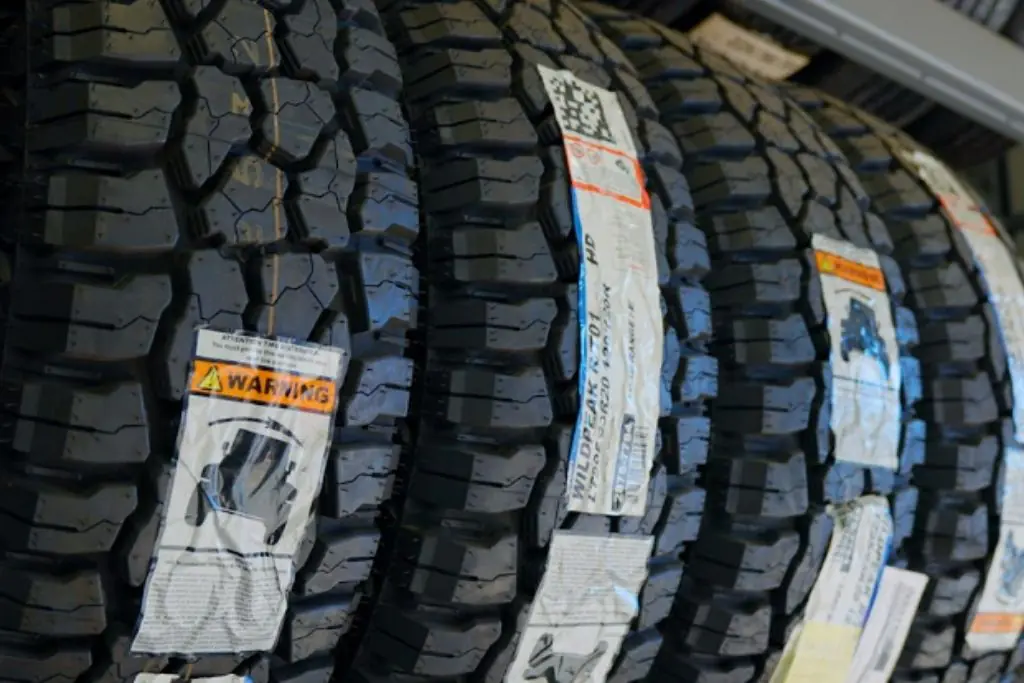
For many customers asking us about all-terrain vs street tires, their vehicle usage gives us the answer pretty quickly.
If the vehicle spends the week traveling on Norwalk streets, nearby city roads, and Southern California freeways, street or highway tires often align better with the driver’s priorities.
Street Tires Can Provide a Quieter Ride
Road noise may not seem important when you are looking at tires online, but it can become very noticeable after thousands of daily-driving miles.
Street-focused tread designs generally prioritize quieter pavement performance.
For commuters and family vehicles, that can make the cabin noticeably more pleasant compared with a very aggressive tire.
That does not mean every all-terrain tire is loud. Modern all-terrain tires vary considerably, and some are designed specifically to maintain better road manners.
But as tread becomes more aggressive, noise is an important customer consideration.
Street Tires Prioritize On-Road Performance
For someone searching for the best tires for daily driving, we recommend focusing heavily on the conditions experienced every day.
On pavement, priorities may include:
- Steering response
- Braking performance
- Ride comfort
- Wet road traction
- Dry road handling
- Highway stability
The specific tire model always matters. We would never tell a customer that every street tire outperforms every all-terrain tire in every condition.
Instead, we compare tires based on the vehicle and what the owner wants from it.
Street Tires May Support Better Fuel Efficiency
Fuel efficiency is another consideration in the all-terrain vs street tires discussion.
Tire weight, construction, size, tread design, inflation, and rolling resistance can all affect how much energy a vehicle needs to keep moving.
More aggressive or heavier setups can sometimes increase rolling resistance.
The impact varies from one vehicle and tire combination to another, so we do not give customers an unrealistic universal MPG-loss number.
If most of your driving is on pavement and maximizing everyday efficiency is a priority, however, it makes sense to include rolling resistance in your tire decision.
When Should Norwalk Drivers Choose All-Terrain Tires?
We recommend all-terrain tires when the driver regularly uses the capability they provide.
That word, regularly, is important.
There is a difference between driving down a dirt road once a year and visiting dirt roads, job sites, campgrounds, or trails several times each month.
For the second driver, all-terrain vs street tires becomes a much more balanced decision.
All-Terrain Tires Add Useful Off-Road Traction
The larger tread blocks and open tread pattern found on many all-terrain tires can provide better traction on loose surfaces than a street-focused tire.
That can be useful for drivers dealing with dirt, gravel, uneven terrain, or certain muddy and sandy conditions.
Many all-terrain options also emphasize durability for mixed-surface use.
For a work truck that regularly reaches unpaved sites or an SUV used frequently for outdoor trips, those advantages are practical, not cosmetic.
Are All-Terrain Tires Good for Daily Driving?
Yes, all-terrain tires for daily driving can be a good choice when you genuinely need both on-road and off-road performance.
Not all A/T tires are equally aggressive.
Some sit much closer to the road-friendly end of the spectrum and are designed for owners who spend most of their time on pavement but periodically need dirt or gravel traction.
For customers who fall into that middle ground, we often recommend looking at road-focused all-terrain options rather than jumping immediately to the most aggressive tread available.
That can provide a more useful balance between everyday comfort and weekend capability.
All-Terrain Tires vs Highway Tires: Is There a Middle Ground?
Absolutely.
The all-terrain tires vs highway tires comparison does not have to be an either-or decision.
We generally think about these tires as a spectrum.
Highway and Street-Oriented Tires
These are usually ideal when virtually all driving happens on pavement.
They tend to prioritize comfort, highway performance, low road noise, steering response, and everyday efficiency.
Road-Focused All-Terrain Tires
These can work well for drivers who spend most of the week on pavement but regularly encounter maintained dirt roads or gravel.
For many truck and SUV owners considering all-terrain vs street tires, this is the category worth examining closely.
More Aggressive All-Terrain Tires
More aggressive tires become easier to justify when off-road driving becomes a meaningful part of vehicle use.
If you regularly travel through loose terrain, rugged job sites, or trails, sacrificing some pavement refinement may be a perfectly reasonable trade.
How Do We Help Norwalk Drivers Choose the Right Tires?
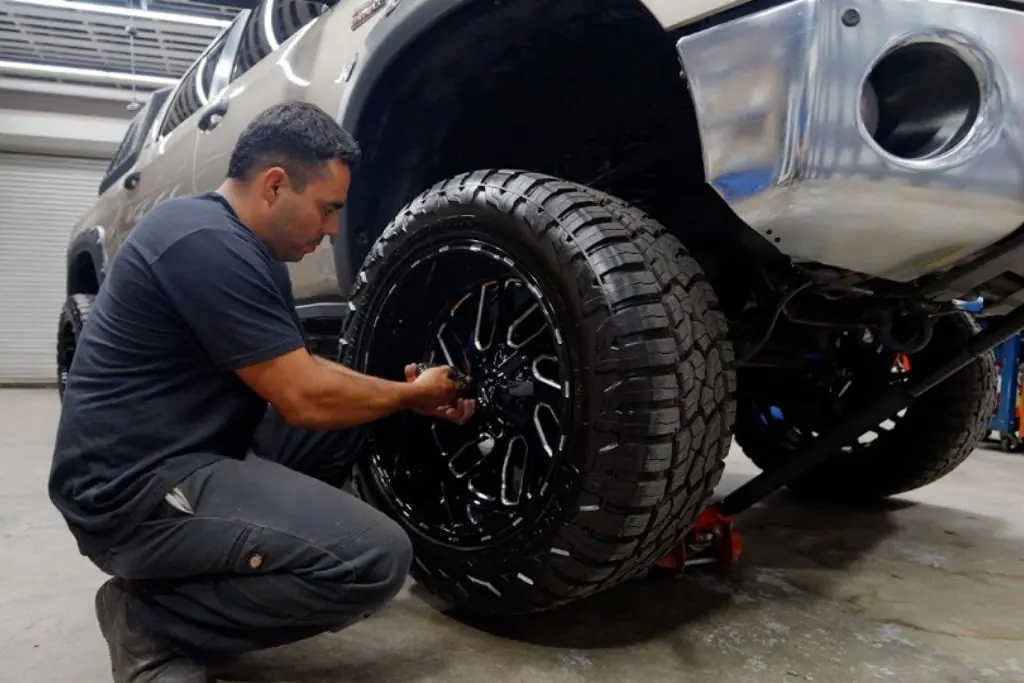
At Soundz Good Garage, our first-hand experience has taught us that tire selection works best when we understand the whole vehicle.
We ask how the customer drives, we look at the wheels, we consider suspension height and clearance, we discuss ride comfort, appearance, terrain, and expected use.
Then we look for an option that brings those priorities together.
That is especially important when tires are part of a larger modification. Our wheels, tires, suspension, and lift kit services allow our team to consider the complete setup rather than choosing components independently.
Before buying tires, we recommend asking yourself:
- How often do I actually leave paved roads?
- Do I care about keeping road noise low?
- Is ride comfort a major priority?
- Do I spend significant time on the freeway?
- Do I tow or carry heavy loads?
- Is fuel efficiency important to me?
- Have my wheels been changed?
- Has the vehicle been lifted or lowered?
- Am I choosing this tire for function, appearance, or both?
Those answers usually make the all-terrain vs street tires decision much clearer.
How Do Wheels and Suspension Affect Tire Choice?
Tires should not be treated as an isolated upgrade.
Wheel width, wheel diameter, offset, tire profile, ride height, suspension geometry, and available clearance can all affect how a tire fits and performs.
A lifted truck may have room for a larger tire, but that does not mean every larger tire is appropriate.
A lowered car may require more careful attention to tire width, profile, wheel offset, and fender clearance.
If wheels are part of your plans, our guide to choosing custom wheels for style and performance explains why fitment involves more than choosing a wheel that looks good.
For lowered vehicles, we also recommend reading our guide to getting the right stance safely with lowering springs.
We prefer planning the complete setup because changes to one component can affect how other components fit, wear, and perform.
If you want to see the types of vehicle upgrades we work with, you can also browse our vehicle upgrade portfolio and project examples.
Which Are the Best Tires for Norwalk Drivers?
The best tires for Norwalk drivers are the ones that match how the vehicle is genuinely used.
If your car, truck, or SUV spends almost all its time on city streets and freeways, street or highway-oriented tires are usually the practical starting point.
If you regularly drive on dirt roads, gravel, job sites, or trails, all-terrain tires may provide capability that is worth the tradeoffs.
If you live somewhere between those two situations, a road-focused all-terrain tire may be the most balanced choice.
After more than 20 years of helping Southern California drivers upgrade their vehicles, our team knows that the best-looking setup is not always the best-driving setup. We would rather help a customer choose the tire that makes sense for the vehicle than push an option with features they will rarely use.
You can learn more about Soundz Good Garage and our vehicle upgrade services, or contact our Norwalk team if you want to talk through your options before making a decision.
Get Help Choosing All-Terrain vs Street Tires in Norwalk
If you are still comparing all-terrain vs street tires, bring us your questions.
At Soundz Good Garage, we can look at your vehicle, current wheels and suspension, driving habits, preferred look, and where you actually plan to drive. From there, our team can help you narrow down an option that makes sense for your daily routine instead of simply choosing the most aggressive tire on the rack.
We have been helping Southern California vehicle owners with wheels, tires, suspension, audio, tint, and other upgrades for more than 20 years, and our installations are backed by our lifetime installation guarantee.
Visit our Norwalk team at 10653 Imperial Hwy, Norwalk, CA 90650, contact Soundz Good Garage, or request a personalized wheel and tire quote to find the setup that fits how you really drive.
FAQ
What Is the Main Difference Between All-Terrain and Street Tires?
All-terrain tires balance pavement performance with added traction on dirt, gravel, and uneven surfaces. Street tires primarily prioritize paved-road comfort, handling, steering response, road noise, and highway efficiency.
Are All-Terrain Tires Good for Highway Driving?
They can be. Many modern all-terrain tires are designed to remain comfortable on highways, although more aggressive designs may produce additional road noise or different steering characteristics compared with street-focused tires.
Do All-Terrain Tires Reduce Fuel Economy?
They can, but there is no universal MPG penalty. Tire size, weight, inflation, tread design, rolling resistance, wheel choice, and the vehicle itself can all influence fuel economy.